
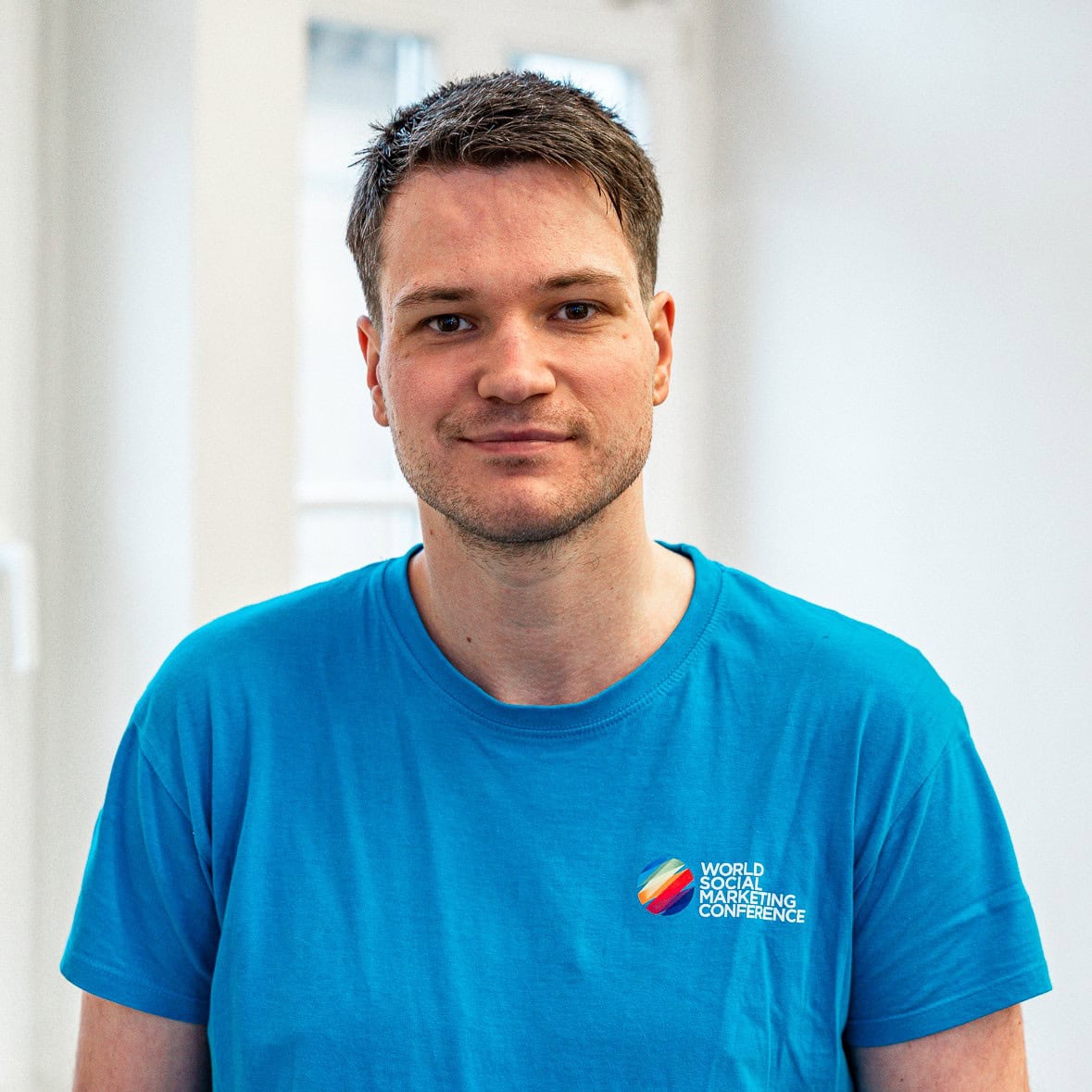
Tadeáš Řáha
TADEÁŠ ŘÁHA is a social marketer, behavior change expert, and National Representative of the European Social Marketing Association who has transformed his own difficult life experiences into meaningful social impact. Since childhood, he suffered from severe depression associated with a personality disorder, from which he became one of the first patients in the Czech Republic to successfully recover through Transference-Focused Psychotherapy (TFP). Later, after twelve years of searching for answers, he received a delayed diagnosis of Scheuermann’s disease of the spine, which has resulted in progressive chronic pain.
Despite his health limitations, as a patient and student he built the largest public awareness campaign for scoliosis and Scheuermann’s kyphosis per capita in the world across the Czech Republic and Slovakia. The project was created with a budget of only CZK 4,000 EUR and more than 3,000 volunteer hours contributed by its founder. It received endorsements from the Ministries of Health of both countries, as well as other prestigious institutions and political leaders. The campaign reached more than 10,000 healthcare professionals, generated media coverage valued at nearly 1M EUR, and contributed to estimated public-sector savings of hundreds of millions of Czech crowns annually.
As a patient advocate, he has spoken at more than 20 leading medical conferences, and his work has led to both professional and political discussions. His activities have been featured by major media outlets. The project received the Extraordinary Rector’s Award of Charles University and was nominated for the Czech PR Award.
He is a pioneer of social marketing in the Czech Republic and Slovakia and the first Czech selected to present at the World Social Marketing Conference. He is also a member of the Czech Fundraising Center. He studied English Language, Social Sciences, Marketing Communication and PR, and Strategic Communication at Charles University.
His life motto, “Turning Pain into Purpose,” reflects his ability to transform personal hardship into systematic support for others and a long-term commitment to improving public health and the functioning of society.
Last edited in June, 2026.